Material Processing Equipment Manufacturer and Custom Machinery Factory
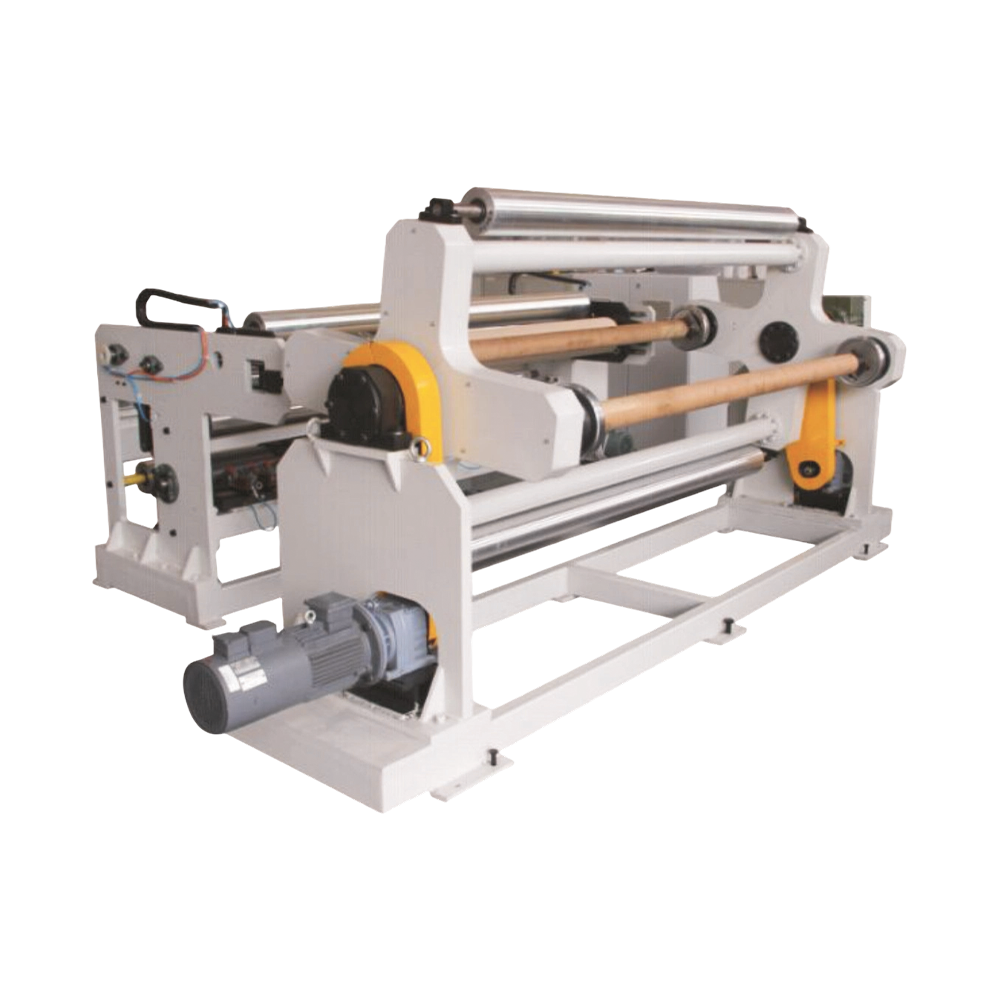
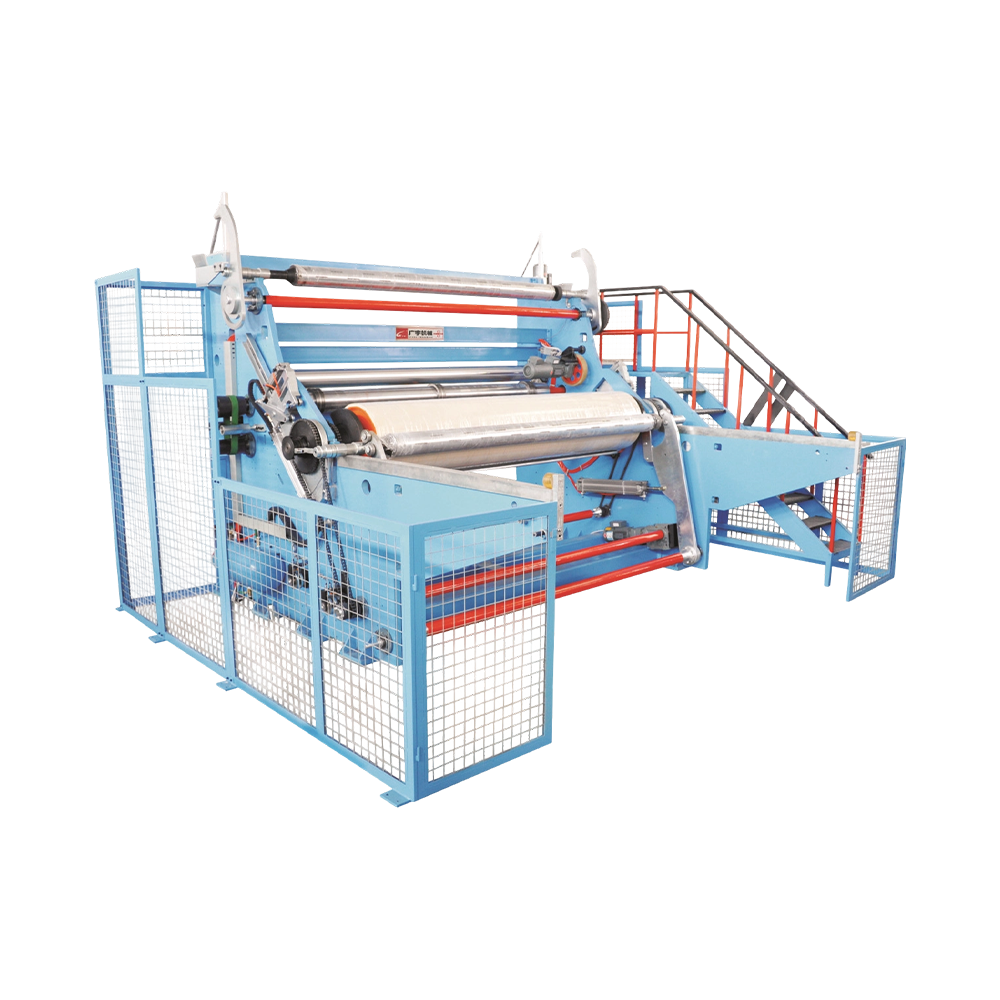
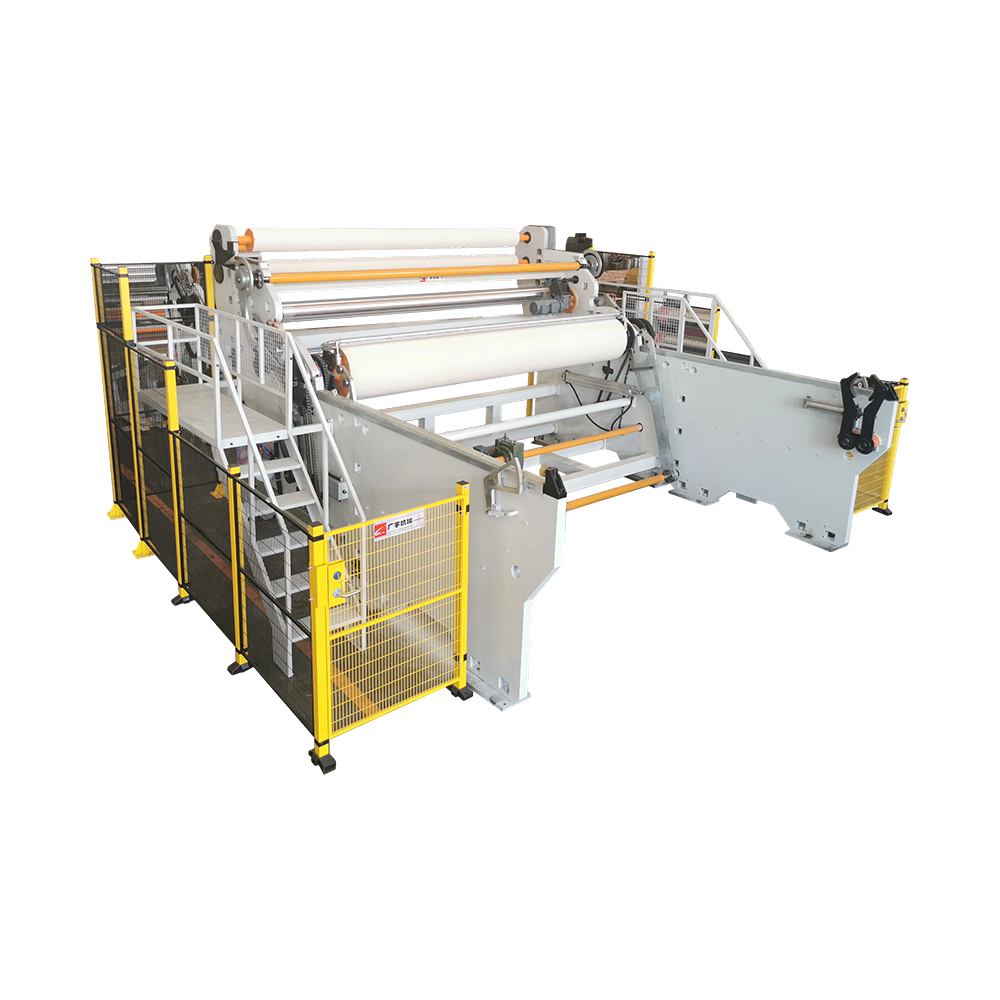
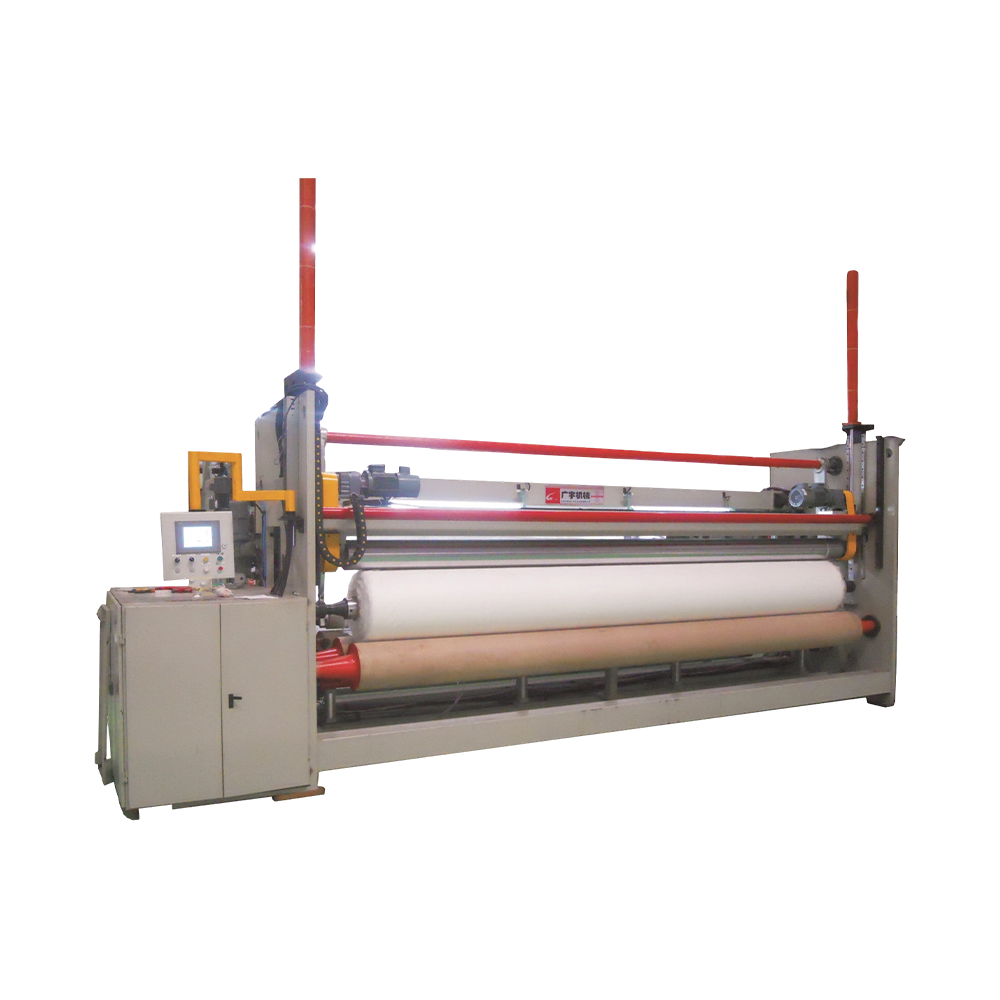
Changzhou Wujin Guangyu Embossing Roller Machinery Co., Ltd. is a China Material Processing Equipment manufacturer and custom machinery factory for embossing, thermal calendering, lamination, slitting, winding and finishing systems. We build the equipment around our own precision rollers, so each machine leaves the factory as one matched system rather than an assembly of bought-in components. The Material Processing Equipment manufacturer range covers nonwovens, tissue and fiber webs, plastic films, composites and metal sheets.
Our engineering team handles roller design, machine structure, heating, pressure and web handling, which simplifies commissioning and troubleshooting later. Typical final requirements include embossed patterns, calendered surface gloss, thermal bonding, film lamination, extrusion coating, slitting and parent-roll winding. Target applications include medical and hygiene, packaging, protective materials, filtration, automotive interior and industrial material lines.
What We Supply in This Category
We supply individual machines, integrated processing sections and complete production lines. The same closed-loop production approach used for our rollers is applied to machine assembly, so mechanical rigidity, thermal uniformity and pressure control are treated as one system. This is especially important for continuous lines where a small mismatch between roller hardness and machine pressure creates uneven patterns, film distortion or premature roller wear.
Within this category, our scope includes:
- Embossing and calendering systems with single-sided, double-sided and multi-ply configurations.
- Nonwoven thermal bonding, finishing, slitting and winding equipment for spunbond, spunlace, meltblown and biodegradable fiber webs.
- Thermal lamination and extrusion lamination/coating lines for nonwoven/film composites and coated substrates.
- Customized machine engineering, existing line retrofits and production line upgrades.
Our Product Range: Three Equipment Families
Our Material Processing Equipment range is organized in three families. Each family shares the same in-house roller technology but is configured for a different material and process window.
| Equipment Family |
Available Machines |
Typical Fit |
| Embossing and Calendering Equipment |
Double-Sided Specialty Embossing & Calendering Machine; Standard Tissue Paper Embossing Machine; High-Speed Multi-Ply Tissue Embossing Machine; Single & Double-Sided Metal Sheet Embossing Machine |
Simultaneous front-and-back pattern forming and surface leveling of nonwovens, plastic films, thin metal sheets and synthetic leather; embossing of low-grammage tissue; heavy-duty texturing of aluminum, galvanized steel and color-coated steel. |
| Nonwoven and Fiber Material Processing Equipment |
Nonwoven Calendering Machine; Nonwoven Finishing Line; Nonwoven Slitting Machine; Nonwoven Winding Machine |
Thermal consolidation, gloss adjustment, pattern texturing, moisture setting, precision longitudinal slitting and winding for spunbond, spunlace, meltblown, thermal bond, ES fiber, geotextile and biodegradable fiber webs. |
| Lamination and Bonding Equipment |
Thermal Lamination Calendering Line; Extrusion Lamination Coating Line |
Fiber-to-fiber thermal bonding and nonwoven/film lamination; continuous extrusion film forming, chill roll casting and coating onto substrates for flexible packaging and composite materials. |
Application Fit and Material Considerations
We configure each machine around the material it will process, not from a fixed standard design. For nonwovens, the key inputs are fiber type, basis weight, desired bond strength and surface finish. Our thermal calendering and finishing equipment is used for spunbond, spunlace, ES fiber, geotextile and biodegradable fiber nonwovens, where heat and pressure must be uniform across the full working width.
For tissue converting, the machine must handle low-grammage paper in the 12-60 g/m² range without tearing, wrinkling or losing softness. Our tissue machines use closed-loop tension regulation and constant-temperature roller heating to preserve bulk while delivering consistent pattern depth. For metal sheet embossing, the machine is built as a heavy-duty system for aluminum, galvanized steel and color-coated steel, with one-key switching between single-sided and double-sided synchronous embossing.
Films and composites require precise control of pressure, temperature and nip uniformity during thermal lamination or extrusion lamination. Our lamination lines coordinate unwinds, coating, chill roll casting, bonding and winding so the finished composite does not develop curl, wrinkles or thickness variation.
Engineering Value: Rollers and Machine Built as One System
Most line issues come from mismatched rollers and machine rigidity. Our closed-loop production includes roller blank precision machining, five-axis laser engraving and hard chrome or ceramic coating using in-house equipment, including German-imported multi-beam direct laser engraving machines. Upper and lower working rollers are pre-matched and run-in before delivery, with pattern depth tolerance held to ≤±0.003 mm and parallelism to ≤±0.004 mm.
Independent thermal-oil circulation keeps surface temperature differentials within ≤±0.7°C on the double-sided machine and ≤±0.8°C on tissue equipment. Integral cast-steel frames are stress-relief annealed to maintain geometry under continuous operation. Because roller material, hardness and pattern depth are calibrated to the machine's maximum linear pressure, the complete system produces clearer patterns, lower rejection rates and longer roller life than machines assembled from purchased components.
Controls, Pressure and Automation Integration
Automation runs from individual machine control to complete line coordination. The Double-Sided Specialty Embossing & Calendering Machine uses segmented servo-hydraulic uniform-pressure control with multi-point feedback. Tissue machines use segmented pneumatic pressure control with multi-point feedback and independent variable-frequency drives for stable tension from start-up through deceleration. Metal sheet embossing equipment supports one-key switching between single-sided and double-sided modes.
For complete production lines, we integrate unwinds, embossing/calendering sections, lamination stations, slitting units and winders into one control sequence. Speed matching, tension management and temperature control are coordinated through automated control systems, giving the high degree of automation required for continuous production in medical, hygiene, packaging and filtration applications.
Quality Assurance and Acceptance
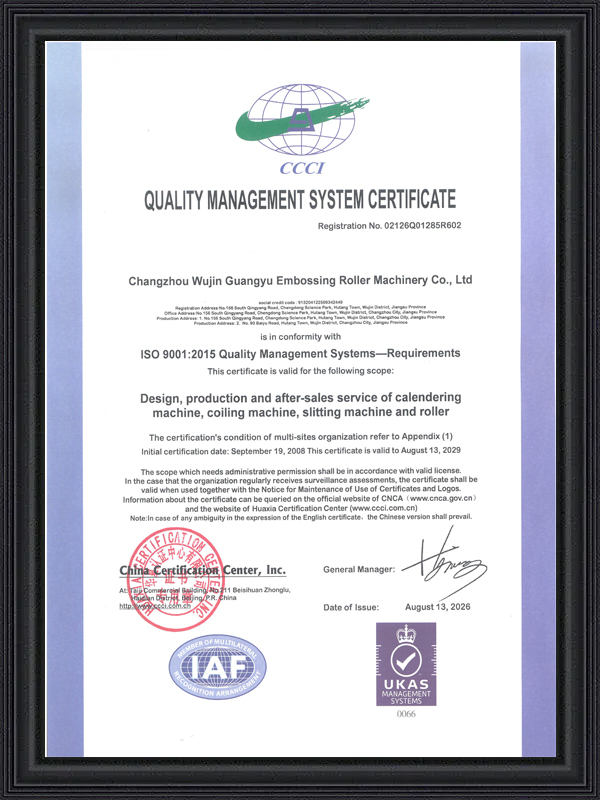
We hold ISO 9001 quality management system certification and EU RoHS compliance, and we participated in drafting the Chinese industry standard for nonwoven fabric hot-rolling mills. Before shipment, each machine undergoes final comprehensive inspection, transmission pre-run, pressure and temperature calibration, and verification of pattern depth and roller parallelism.
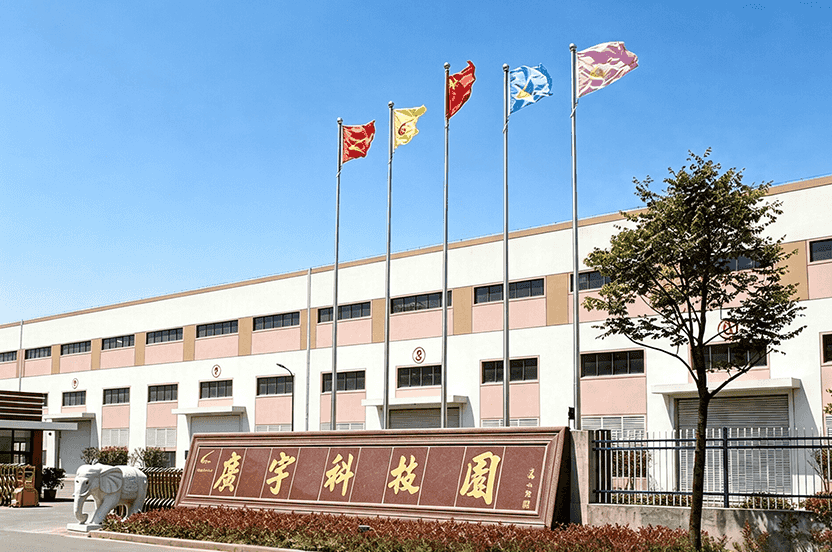
For applicable export configurations, CE documentation is prepared. Our factory operates a 120,000 m² industrial park with more than 100 sets of high-precision production equipment, and our products are exported to more than 50 countries and regions worldwide.
What we confirm with every proposal:
working width, line speed, pressure and temperature range, roller configuration, control scope, and acceptance criteria based on the material and output target you define.
Information We Use to Configure Your Solution
To prepare a machine configuration and quotation, we need the following project inputs:
- Material: type, composition, basis weight or sheet thickness, and web width.
- Finished product: pattern style and depth, gloss level, single- or double-sided effect, and lamination or coating recipe.
- Performance: target line speed, roll diameter and format, and production volume.
- Line interface: existing unwind, slitter or winder; control architecture; available floor space and layout.
- Utilities: available power supply, heating medium such as thermal oil or steam, and compressed air capacity.
- Scope: new complete line, replacement machine, or retrofit of an existing production line.
With these inputs, our proposal defines the roller specification, heating and pressure systems, automation interface, and the documentation package for your project.
Maintenance, Spare Parts and Rebuilding
Because we manufacture rollers in-house, we can supply matched spare rollers, re-engraving and hard chrome rebuilds for the machines we deliver. Roller refurbishment intervals depend on material abrasiveness, operating pressure and run hours, but a matched spare roller set minimizes unplanned downtime in multi-shift operations. Replacement rollers are calibrated and run in before shipment so they drop into the existing machine with minimal adjustment.
Frequently Asked Questions
1. What types of material processing equipment do you manufacture?
We manufacture embossing and calendering equipment, nonwoven and fiber material processing equipment, and lamination and bonding equipment. The range includes the Double-Sided Specialty Embossing & Calendering Machine, Tissue Paper Embossing Machine, Single & Double-Sided Metal Sheet Embossing Machine, Nonwoven Calendering Machine, Nonwoven Finishing Line, Nonwoven Slitting Machine, Nonwoven Winding Machine, Thermal Lamination Calendering Line and Extrusion Lamination Coating Line.
2. Do you build complete production lines or just single machines?
Both. We supply individual machines as well as integrated complete lines. Because rollers, heating, pressure and web-handling sections are designed in-house, a complete line can be coordinated for material type, output and automation requirements.
3. What makes your rollers different from bought-in rollers?
Our working rollers are manufactured in the same factory as the machine. They are forged, laser-engraved, coated, pre-matched and run-in as sets. This avoids the mismatch between roller hardness, pattern depth and machine pressure capacity that appears when rollers are sourced from outside suppliers.
4. How do you handle low-grammage tissue paper?
Define base paper grammage in the 12-60 g/m² range, web width, target speed and desired pattern. Our closed-loop tension control and low-temperature constant-temperature rollers are matched to that material so the web does not tear or wrinkle, and the finished product retains softness and bulk.
5. What is your engineering basis for a quotation?
We quote after reviewing the material, finished surface effect, working width, line speed, utilities and integration scope. For a retrofit, we also need the existing line layout and control interface. We use that data to define roller configuration, heating and pressure system, automation scope and acceptance criteria.
6. Which compliance documents do you support?
ISO 9001 quality management and EU RoHS compliance are in our standard scope. For applicable export configurations, CE documentation is prepared. We also participated in drafting the Chinese industry standard for nonwoven fabric hot-rolling mills.


 English
 русский
 Español
 عربى