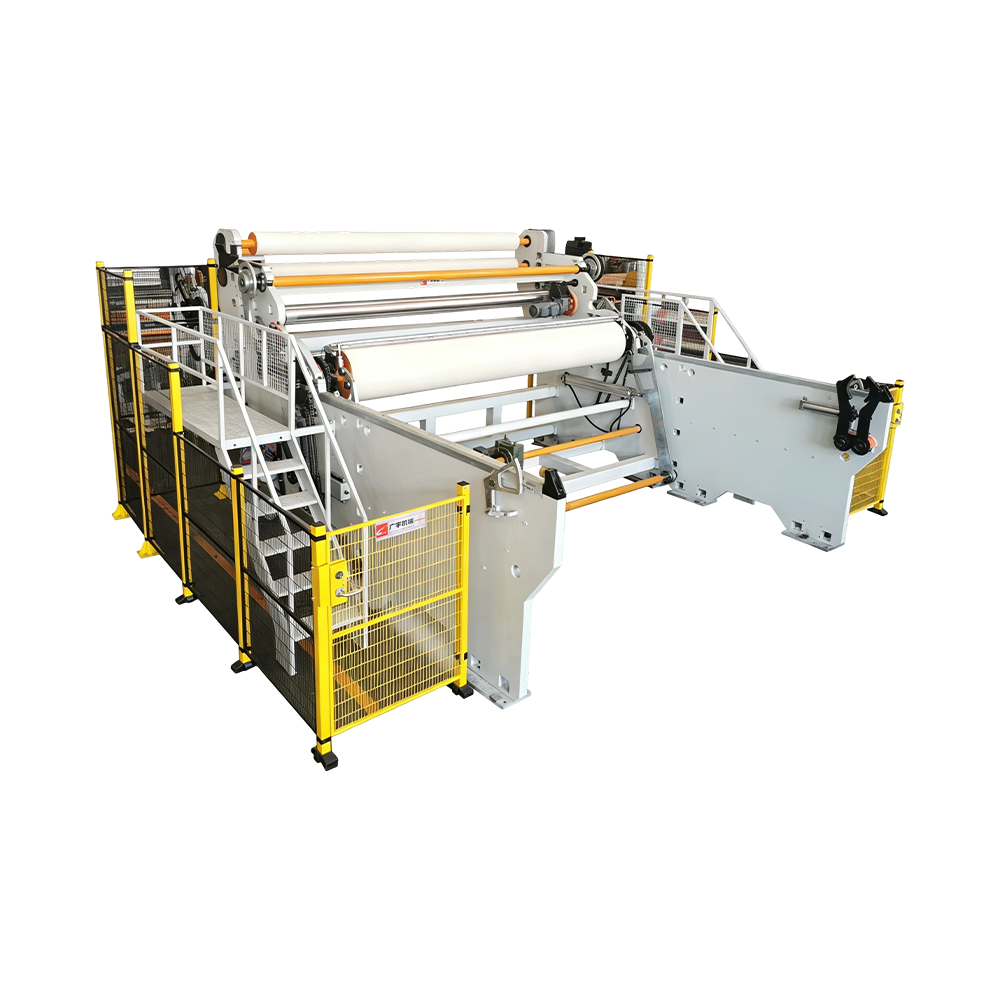
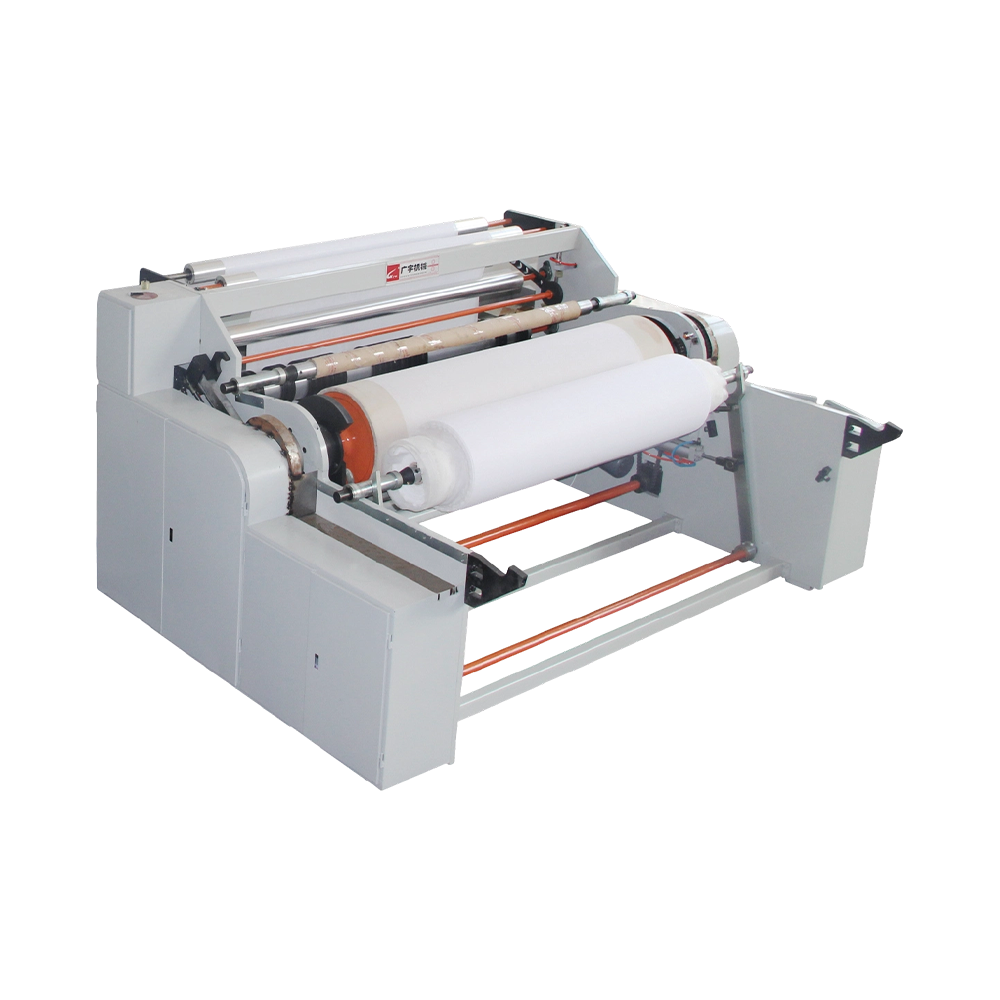
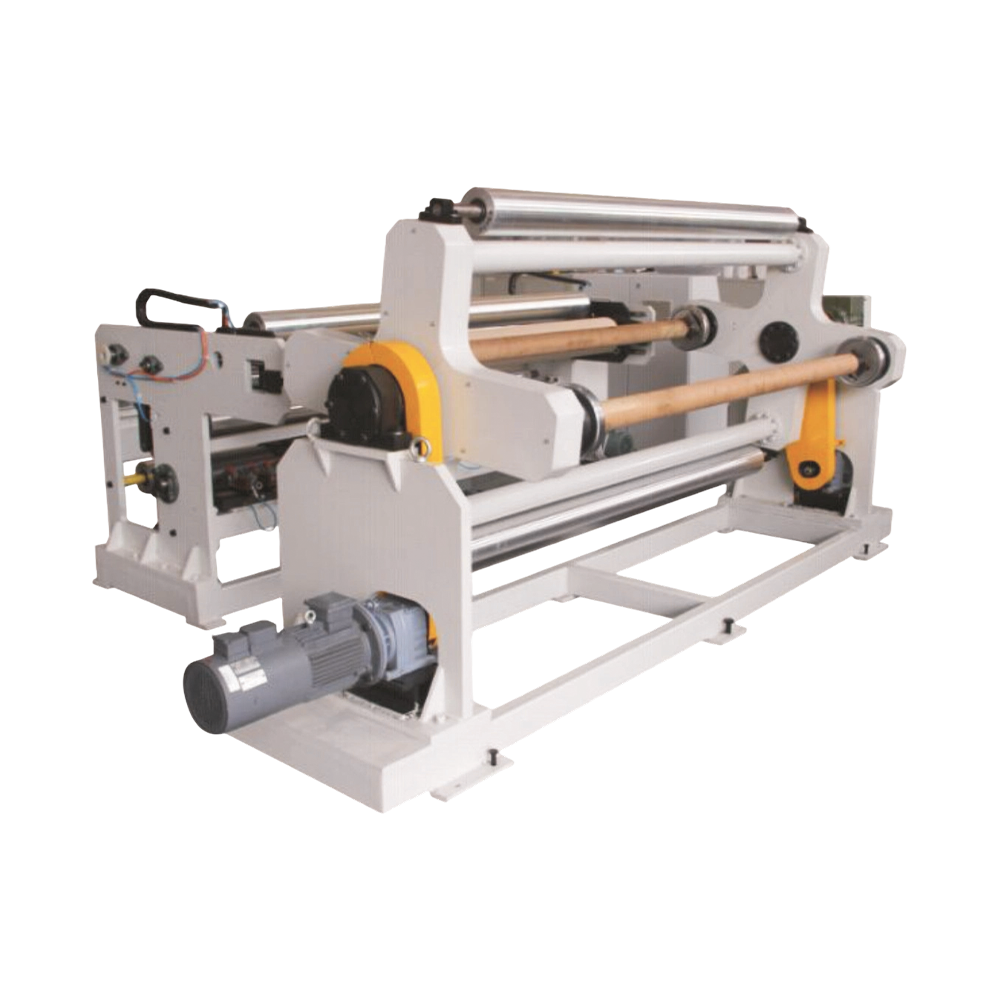
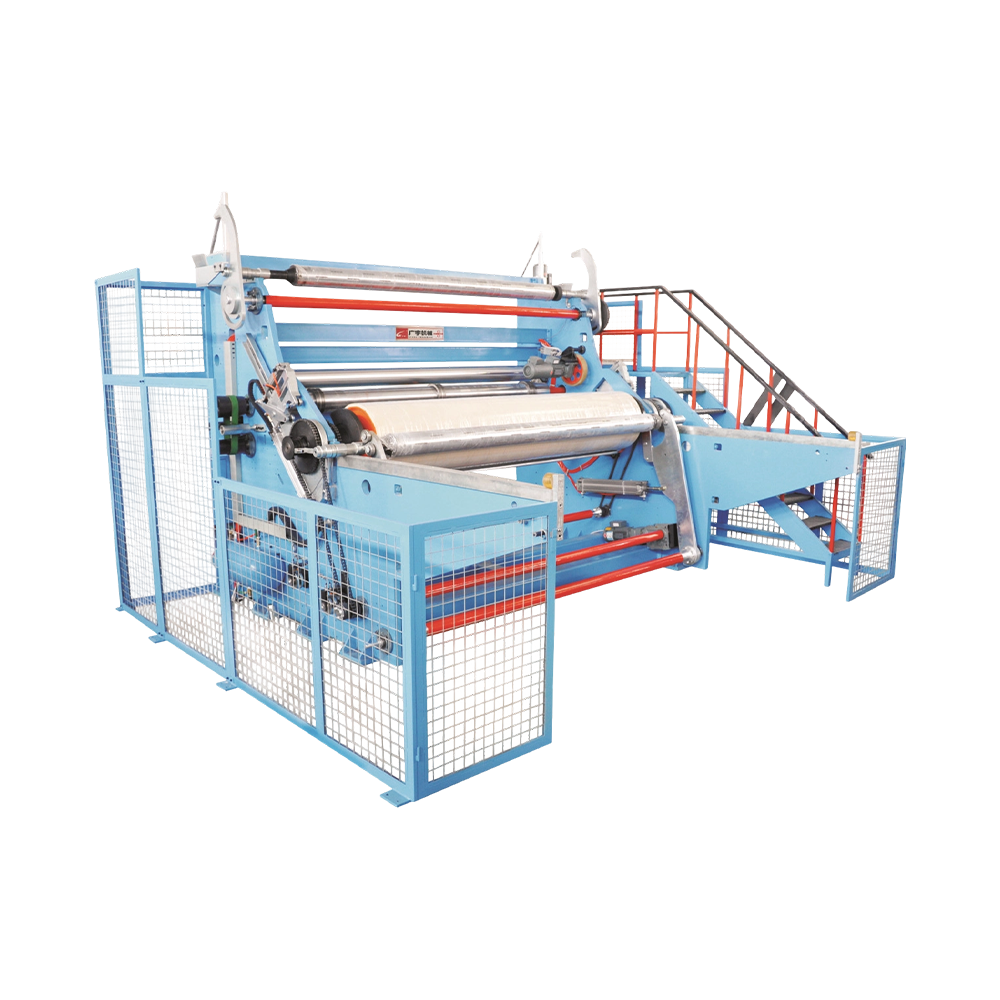
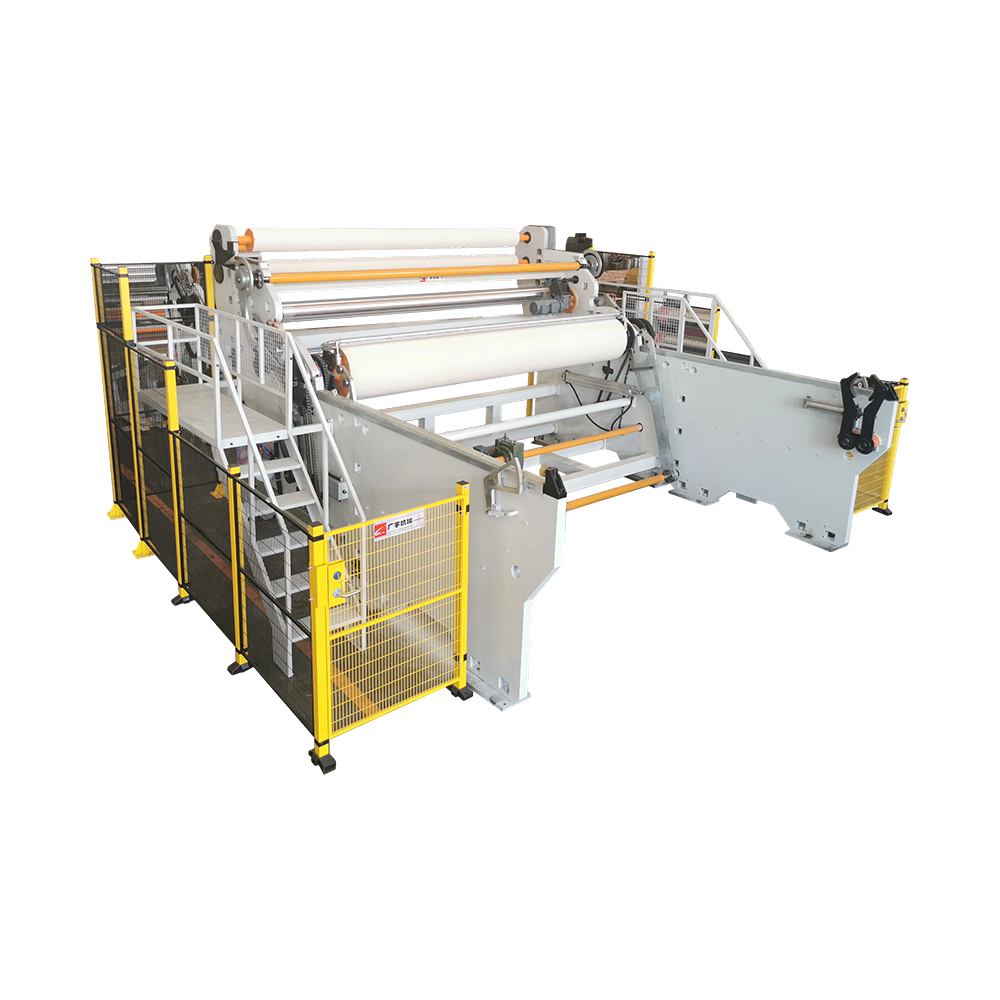
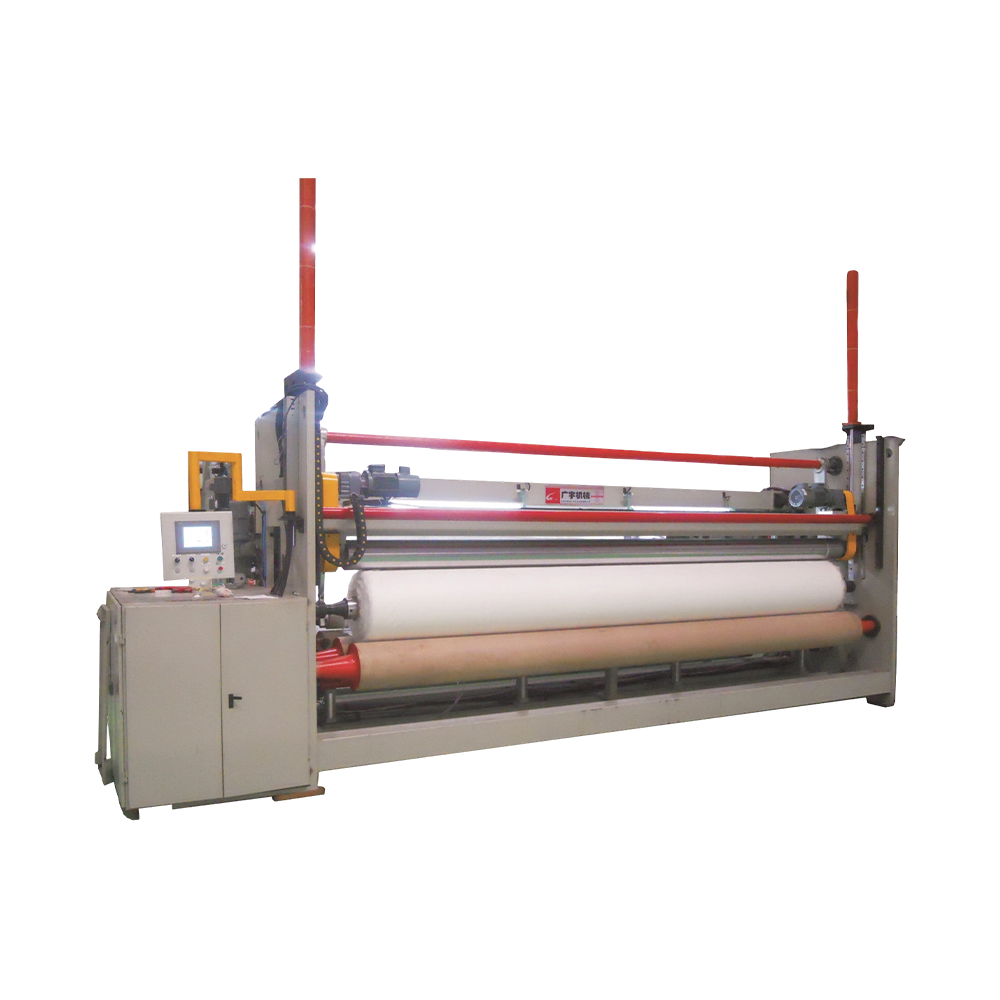
We are a China-based Nonwoven Winding Machine Supplier focused on the final stage of nonwoven production: converting finished webs into compact parent rolls that stay square, stable and ready for slitting or converting. Our range covers turret-style end-of-line winders, center-surface precision winders and three-roll extra-wide models, with speeds up to 1000 m/min, working widths to 5400 mm and maximum roll diameters to Φ3500 mm.
A Complete Range of Nonwoven Winding Machines
We build five machine platforms to match the output of a production line, not just the individual roll. Every model uses independent servo drives, a stress-relieved welded frame and dust- and moisture-sealed electrical cabinets, so the same mechanical base can be configured for hygiene, geotextile, filtration or home-textile lines.
| Model |
Max speed |
Max roll diameter |
Max working width |
Best fit |
| Standard Non-woven Fabric Winding Machine |
300 m/min |
Φ1500 mm |
5400 mm |
End-of-line turret winding for continuous nonwoven production |
| Center-Surface Non-Woven Fabric Winder |
250 m/min |
Φ1200 mm |
3600 mm |
Precision winding of tension-sensitive webs using mandrel center drive |
| High-Speed Non-Woven Fabric Rewinder |
650 m/min |
Φ2000 mm |
5400 mm |
Continuous turret operation for high-volume production lines |
| New High-Speed Nonwoven Fabric Winder |
1000 m/min |
Φ3500 mm |
4200 mm |
Heavy-duty winding of extra-large parent rolls for long production cycles |
| Three-Roller Non-Woven Fabric Winder |
350 m/min |
Φ1200 mm |
7000 mm |
Extra-wide applications requiring low-tension surface winding |
The center-surface model is the right choice when a line runs delicate webs and needs direct mandrel-driven tension control. The three-roll configuration handles the widest webs with a proven surface-winding method. Turret models are the production workhorses where automatic roll change cannot wait for a line stop.
Tension, Edge Control and Continuous Operation
Nonwoven webs compress easily, and the defects that matter most appear at the roll: telescoped ends, layer shifting, inner-layer over-tightening and loose outer wraps. We address these with a three-zone closed-loop tapered tension control system that keeps tension accuracy within ≤±2.2%. As the roll diameter increases, winding tension is reduced in proportion to the programmed curve, preserving fiber bulk in soft materials while maintaining a square roll edge.
- Continuous roll change: The dual-station turret winding arm cuts the web, transfers to a new core and continues the cycle without stopping the upstream calender. This removes the 8-15 minute line stop typical of conventional winders and raises line utilization by 28%.
- Edge correction: Ultrasonic EPC sensors plus self-manufactured precision guide rollers hold web edge deviation to ≤±0.3 mm across the full working width.
- Stable frame: The welded, stress-relief annealed frame maintains rigidity in the heat, humidity and fiber dust of a nonwoven plant, and the dustproof electrical cabinets suit tropical or desert sites.
- Process memory: 108 recipe groups store tension curves, speed profiles and roll-change parameters for quick product changes.
Matching the Machine to the Material
The same winder can feel very different to a 12 g/m² airlaid wipe and a 600 g/m² needle-punched geotextile. Our machine configuration always starts with fabric weight, line speed and roll-size targets. We select the winding method, drive sizing, air shaft and taper curve to give the roll the density your downstream process expects.
- Medical and hygiene nonwovens: SMS, spunlace and thermal bond webs for diaper topsheets, masks, medical sheets and wet wipe mother rolls.
- Biodegradable and plant-fiber nonwovens: PLA and bamboo-fiber webs that lose bulk if wound with excessive tension.
- Industrial geotextiles and filtration media: heavyweight needle-punched and air-filter fabrics that need the high-capacity frame and large-roll capability.
- Synthetic leather bases and home textiles: post-calendering winding for storage, coating or embossing.
- Airlaid and food-contact wiping materials: precision low-tension winding for lightweight, tear-sensitive substrates.
Configuration, Controls and Line Integration
We supply the Nonwoven Winding Machine as a standalone unit or as part of a connected sequence with our Nonwoven Calendering Machine, Nonwoven Slitting Machine and finishing line equipment. The electrical system is designed to match the existing line interface, so we can coordinate drives, sensors and recipe management without forcing a second control standard onto the plant.
- Drive architecture: independent servo motors for unwind, transition and winding zones.
- Core handling: dual-station turret air shafts support fast core loading and roll removal.
- Torque and taper curves: programmed by material type, fabric weight and target roll density.
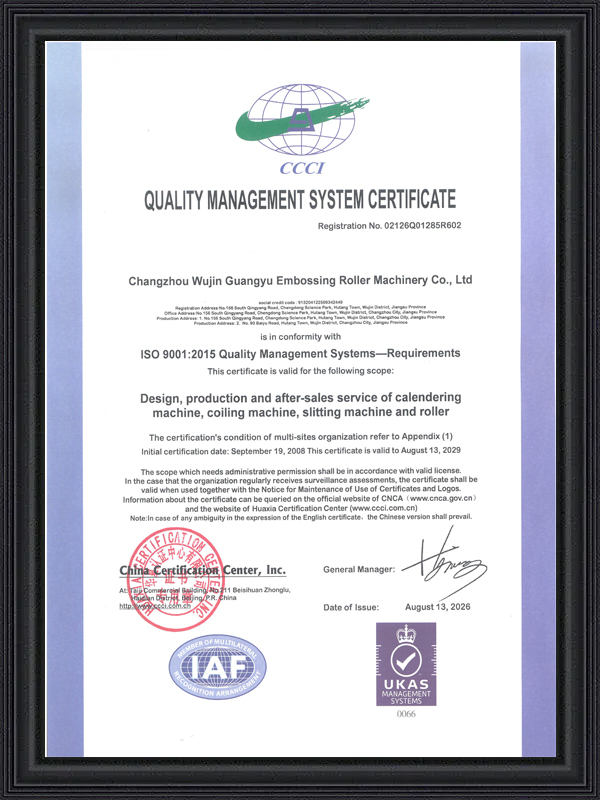
- Compliance: CE certification for overseas installations, ISO 9001 and ISO 14001 management-system certification.
Where the project includes an existing calender or finishing line, we use the upstream machine's actual speed, temperature and web path to configure the interface. The same control logic extends to our Industrial Rollers, which we manufacture in-house to keep guide-roller quality consistent with the machine frame.
Engineering and Quality Approach
Changzhou Wujin Guangyu Embossing Roller Machinery Co., Ltd. builds winders in the same facility where we produce precision industrial rollers, embossing rollers and calendering equipment. The guide rollers inside each winder are machined from internally forged, heat-treated alloy steel, with straightness and balancing control that would be difficult to guarantee with externally sourced components. This vertical integration allows us to hold both machine-level performance and roll-quality standards in one delivery.
The frame is made from thickened steel plate, fully welded and stress-relief annealed to eliminate internal stress before machining. The electrical cabinets are dustproof and moisture-sealed for the conditions of a nonwoven plant, and export machines are prepared as knockdown crates with vacuum rust protection.
Information We Use to Configure Your Solution
To prepare a configuration and quotation, we need:
- Material type, fabric weight range and typical web width;
- Line speed at the winding point and whether the machine will run continuously;
- Target parent-roll diameter, core size and maximum roll weight;
- Upstream equipment description: calender, embosser, bonder or finishing line;
- Electrical supply, plant layout and environmental conditions;
- Control interface requirements: recipes, data logging, remote support or line PLC communication.
We use those parameters to select the winding method, speed tier, roll-change configuration, tension profile and any special guarding or material-contact finishes required for the application.
Frequently Asked Questions
What is the practical difference between the turret winders and the center-surface model?
Turret winders are built for continuous production and automatic roll change at high line speeds. The center-surface winder drives the core directly through a mandrel, which gives finer tension control for soft or delicate webs where even a short open span can cause stretching. We recommend the center-surface model for precision applications and the turret models for high-output hygiene or converting lines.
How does the tapered tension system prevent telescoping?
The control system measures tension in unwind, transition and winding zones independently and reduces winding tension as the roll diameter grows. This prevents the outer layers from being pulled too tight over the inner layers, which is the mechanical cause of telescoping and layer shifting. The same behavior keeps soft webs from stretching or losing loft.
Can this machine be added to an existing nonwoven line?
Yes. We configure the winder around the available speed, width and layout, and match the control interface to the upstream calender or finishing machine. Tell us the make, speed and material range of the existing line, and we will include the required interface and installation scope in the proposal.
What materials can be wound at 1000 m/min?
The new high-speed winder is configured for stable, relatively uniform webs that tolerate high winding speeds, typically hygienic nonwovens and similar light- to medium-weight materials. Heavy geotextiles and very soft bulky fabrics are usually run on the standard, center-surface or three-roll models, where lower speed and higher tension control deliver a better final roll.
How is the machine prepared for export?
Machines are supplied as knockdown crates with vacuum rust protection, and the electrical cabinets are sealed against dust and moisture for long ocean transit. CE certification is included for overseas installations, with supporting documentation provided before shipment.


 English
 русский
 Español
 عربى