Founded in
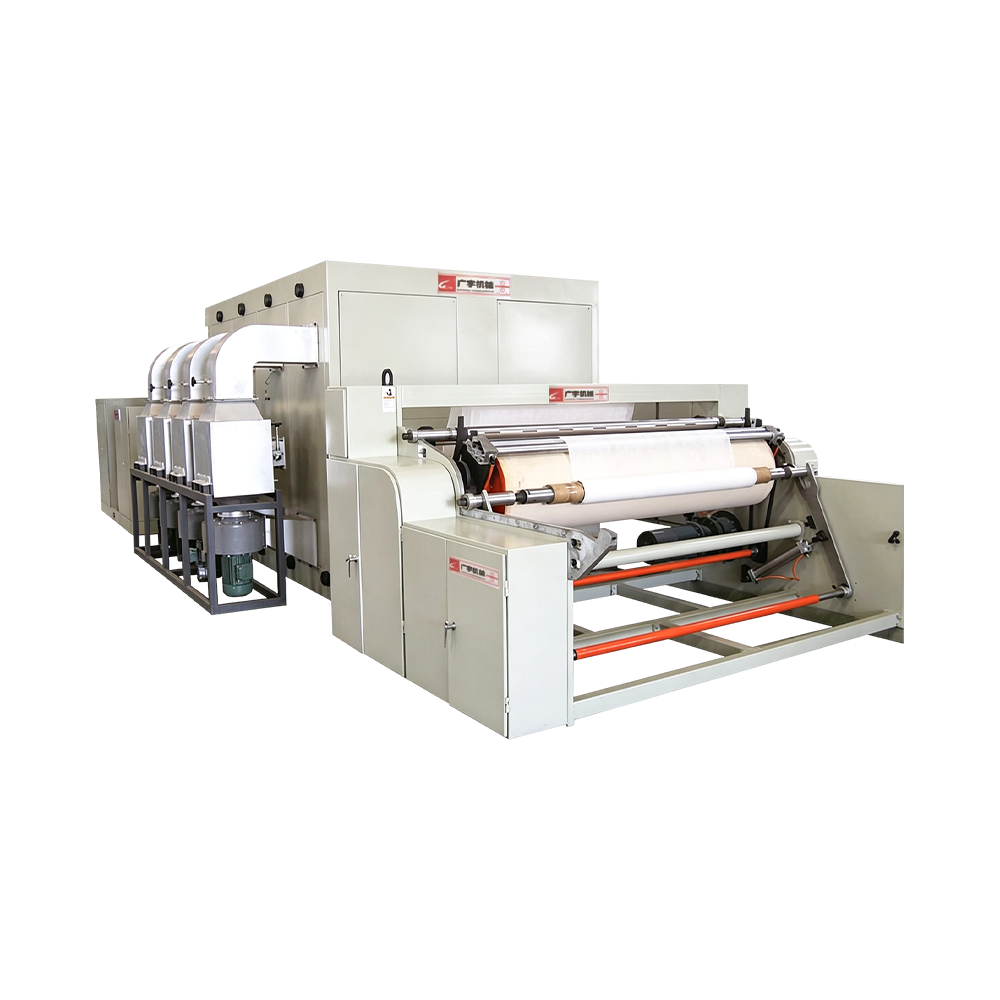
Nonwoven Finishing Line is a post-formation processing system designed for the final quality-shaping stage in nonwoven production. It performs thermal consolidation, gloss adjustment, pattern texturing, moisture setting, slitting, and automatic winding on spunbond, spunlace, thermal bond, and biodegradable fiber nonwovens. Built on a modular architecture, the line allows independent configuration of functional units including thermal bonding, matte calendering, breathable embossing, moisture setting, high-speed slitting, and turret winding sections. Existing production lines can be retrofitted with individual modules without complete replacement. Available in Ω round-screen hot-air circulation and infrared radiation types, with maximum speed 800m/min, maximum width 4200mm, and single or double-sided application.
Product Advantages
·Modular Architecture with Retrofit Capability
The system employs a standardized modular configuration approach. Functional units—thermal consolidation, matte calendering, breathable embossing, moisture setting, high-speed slitting, and automatic turret winding—can be selected or added based on specific needs. Existing older lines can be upgraded with individual modules without full demolition, cutting transformation time by 60% at one-third the cost of complete imported line replacement.
·Integrated Component Manufacturing
All rolls and components are internally developed and manufactured, eliminating performance mismatches from externally sourced assemblies. As the lead drafter of China's nonwoven thermal calendering machine industry standard, the entire line—thermal bonding rolls, leveling rollers, calender rolls, and tension guide rollers—undergoes unified matching. The proprietary PLC system provides closed-loop synchronization of temperature, pressure, and speed, achieving basis weight deviation ≤±1.2g/㎡ across the full web width, with premium hygiene material yield rates improving over 85% compared to assembled equipment.
·Zoned Thermal Field Control
Dual-layer partitioned hot-air circulating ovens work with surrounding deep-hole heat exchange calender rolls for coordinated heating, eliminating localized airflow turbulence and roller temperature differentials. Line temperature fluctuation ≤±1℃, with PP and PLA fiber thermal shrinkage controlled within ≤1.8%—finished materials maintain dimensional stability through storage, cutting, and lamination, meeting European hygiene material standards.
·Closed-Loop Tension Management
Imported servo tension motors with EPC photoelectric edge correction provide six-zone gradient tension adjustment from unwinding to winding. All load-bearing rollers undergo three-stage dynamic balancing under simulated load before delivery, ensuring wrinkle-free operation at speeds up to 420m/min. Lightweight SMS and spunlace materials process without stretching or wave-edge defects, delivering 45% higher output than conventional domestic equipment.
·Energy-Efficient Design
Oven exhaust heat recovery preheats the roller thermal oil circuit, reducing electrical consumption by 28%. Vibration-damping bases and enclosed sound-reducing covers maintain noise levels ≤78dB, meeting CE and ISO14001 environmental compliance for overseas installations.
·Biodegradable Fiber Presets
Dedicated low-temperature parameters for PLA and plant-based fibers are pre-programmed into the control system. Lower peak temperatures with controlled ramp rates, combined with corrosion-resistant anti-stick coated rollers, prevent thermal degradation of bio-based fibers. Bond strength meets export requirements for eco-friendly packaging and disposable hygiene products.
Application Scenarios
Medical and hygiene nonwoven finishing (SMS, spunlace, thermal bond cotton for masks, medical sheets, surgical drapes, diaper topsheets, feminine care products) with controlled breathability, tensile strength, and dimensional stability. Biodegradable eco-friendly nonwoven processing (PLA plant-fiber materials for shopping bags, food storage packaging, biodegradable wipes) supporting global plastic reduction initiatives. Home textile and decorative nonwovens (carpet backings, sofa liners, curtain nonwovens) with adjustable softness and anti-slip properties. Industrial filtration and geotextile finishing (dust filter fabrics, geotextiles) with enhanced density and abrasion resistance. Beauty and cosmetic nonwoven processing (makeup remover pads, facial cleansing cloths) with softening and micro-embossing. Automotive interior nonwoven substrate finishing (roof liners, trunk liners) with dimensional stability for durability requirements.
| Exclusive Core Parameters | Basis weight deviation | ≤±1.2g/㎡ |
| Temperature fluctuation | ≤±1℃ | |
| Thermal shrinkage | ≤1.8% | |
| Maximum line speed | 420m/min | |
| Noise level | ≤78dB | |
| Energy reduction | 28% | |
| Control system | Proprietary PLC closed-loop | |
| Compatible fibers | PP, PET, viscose, PLA biodegradable | |
| General Specifications | Working width | 1200mm–5600mm (custom) |
| Fabric weight range | 15–250g/㎡ | |
| Heating options | Thermal oil / steam / natural gas / electric | |
| Temperature range | 80℃–230℃ | |
| Maximum roll diameter | Φ1000mm | |
| Installed power | 130kW–270kW | |
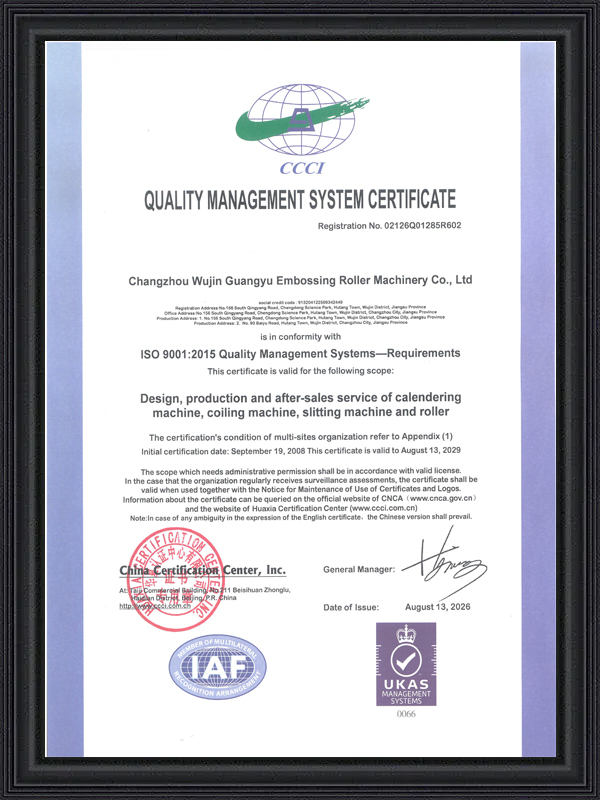
| Certifications | CE, ISO9001, ISO14001, SGS | |
| Delivery | 8–12 months |
Founded in
Country of Sale
Employees
Factory
Area
Pay Attention to Our Latest News and Exhibitions
Industry News
2026-11-02
Industry News
2026-11-02
Industry News
2026-11-02
Industry News
2026-08-19
Industry News
2026-08-19
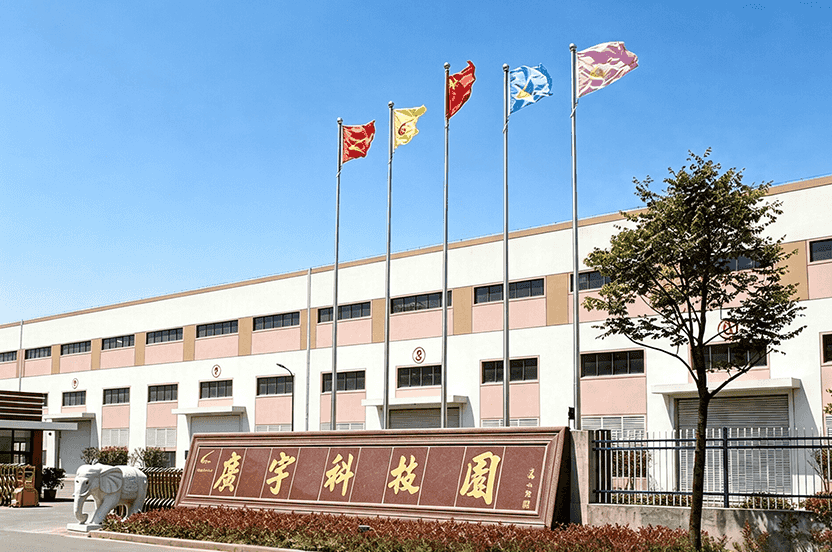
Changzhou Wujin Guangyu Embossing Roller Machinery Co., Ltd. is a China-based Nonwoven Finishing Line Supplier that engineers post-formation processing systems for the final quality-shaping stage in nonwoven production. Our lines perform thermal consolidation, gloss adjustment, pattern texturing, moisture setting, slitting and automatic winding on spunbond, spunlace, thermal bond and biodegradable fiber webs. Because we manufacture the rolls and machine frames in one factory, temperature, pressure and speed are controlled as one matched system rather than assembled from unrelated third-party components.
Our portfolio covers complete nonwoven finishing lines, individual upgrade modules, and retrofits of existing older lines. The same roll technology is shared with our Nonwoven Calendering Machine, so we can match bonding, embossing and calendering duty without over-engineering each unit.
We supply the following functional units as part of a complete line or as upgrades to an existing line. Individual modules can be added without full demolition; retrofit projects cut transformation time by roughly 60% at about one-third the cost of a complete imported line replacement. Available with Ω round-screen hot-air circulation or infrared radiation heating, and single- or double-sided application.
Heated calender rolls with dual-layer partitioned hot-air circulating ovens provide consistent consolidation across the full web width and controlled bonding strength.
Gloss and surface smoothness are adjusted with precision calender rolls to produce matte, semi-gloss or uniform finish for hygiene and packaging webs.
Pattern texturing and breathable micro-embossing are applied with laser-engraved roller sets, with single- or double-sided embossing optional.
Steam and moisture control stabilizes fiber structure and reduces residual shrinkage, especially for webs that will later be cut, laminated or converted.
EPC photoelectric edge correction and servo-driven slitting maintain clean edges at speed, using the same web-handling principles as our Nonwoven Slitting Machine.
Automatic roll change, tension tapering and finished-roll handling keep the line productive through high-speed cycles, with the same winding logic used in our Nonwoven Winding Machine.
The range is built for nonwovens from 15 to 250 g/m², with compatible fibers including PP, PET, viscose and PLA. Working width is configured from 1200 mm to 5600 mm. The line is typically applied in the following scenarios.
| Application | Material Examples | Finishing Emphasis |
|---|---|---|
| Medical and hygiene | SMS, spunlace, thermal bond cotton, diaper topsheets, feminine care products | Controlled breathability, tensile strength and dimensional stability |
| Biodegradable packaging | PLA and plant-based nonwovens for shopping bags, food packaging, wipes | Low-peak temperatures and anti-stick rolls prevent thermal degradation |
| Home textiles and decoration | Carpet backings, sofa liners, curtain nonwovens | Adjustable softness and anti-slip properties |
| Filtration and geotextiles | Dust filter fabrics, geotextiles | Enhanced density and abrasion resistance |
| Beauty and cosmetics | Makeup remover pads, facial cleansing cloths | Softening and micro-embossing |
| Automotive interiors | Roof liners, trunk liners | Dimensional stability for long-term durability |
Line performance is defined by closed-loop synchronization of temperature, pressure and speed in our proprietary PLC system. This is supported by six-zone gradient tension control from unwinding to winding and three-stage dynamic balancing of all load-bearing rollers under simulated load before delivery.
| Parameter | Standard / Range | Process Relevance |
|---|---|---|
| Working width | 1200-5600 mm custom | Full-width uniformity across wide spunbond, SMS and spunlace lines |
| Fabric weight range | 15-250 g/m² | Covers lightweight hygiene webs through heavier geotextile and automotive substrates |
| Heating options | Thermal oil / steam / natural gas / electric | Matched to existing plant utilities and retrofit constraints |
| Temperature range | 80-230 °C; fluctuation ≤ ±1 °C | Consistent thermal bonding and safe low-temperature PLA processing |
| Basis weight deviation | ≤ ±1.2 g/m² across full web width | Stable caliper, bonding and converting behavior |
| Thermal shrinkage | ≤ 1.8% for PP and PLA | Dimensional stability through storage, cutting and lamination |
| Line speed | Wrinkle-free operation up to 420 m/min; design supports up to 800 m/min depending on module configuration | High output for hygiene lines without stretching or wave-edge defects |
| Max roll diameter / power | Φ1000 mm; 130-270 kW installed | Defines hall space, electrical supply and thermal capacity |
| Noise / compliance | ≤ 78 dB; CE, ISO 9001, ISO 14001, SGS | Overseas installation and site acceptance documentation |
Heat recovery from the oven exhaust preheats the roller thermal oil circuit, reducing electrical consumption by about 28% on a complete line. Vibration-damping bases and enclosed sound-reducing covers are included as standard to keep the line within the noise limits above.
We configure the line around your building utilities, existing web path and production target. New lines are delivered as integrated systems; existing lines can accept individual modules with minimal disruption.
Our finishing lines benefit from a closed-loop manufacturing process that covers roller blank fabrication, CNC precision grinding, mirror polishing, laser engraving and hard chrome electroplating. This keeps roller quality under our control from raw material to final inspection.
To prepare a precise configuration and quotation, we use the following project inputs:
Yes. The line covers fabric weights from 15 to 250 g/m² and compatible fibers including PP, PET, viscose and PLA. The PLC recipe system stores different temperature, pressure and speed profiles for each material structure.
Yes. The modular architecture allows individual units such as breathable embossing, matte calendering, slitting or turret winding to be added without replacing the full line. Retrofit projects can cut transformation time by roughly 60% at about one-third the cost of a complete imported line replacement.
Heating can be based on thermal oil, steam, natural gas or electric supply. Installed power is typically 130-270 kW depending on working width and modules. We confirm the utility summary after the line configuration is defined.
Imported servo tension motors, EPC photoelectric edge correction and six-zone gradient tension control work from unwinding to winding. All load-bearing rollers are dynamically balanced under simulated load before delivery, which protects lightweight SMS and spunlace webs from stretching and wave-edge defects.
The control system includes dedicated low-temperature presets for PLA and plant-based fibers. Lower peak temperatures, controlled ramp rates and corrosion-resistant anti-stick coated rollers prevent thermal degradation while maintaining bond strength for eco-friendly packaging and hygiene products.
Overseas projects include CE, ISO 9001, ISO 14001 and SGS documentation, along with roll inspection and dynamic balancing reports. Our technical liaison team coordinates installation support and after-sales maintenance for the complete line.